
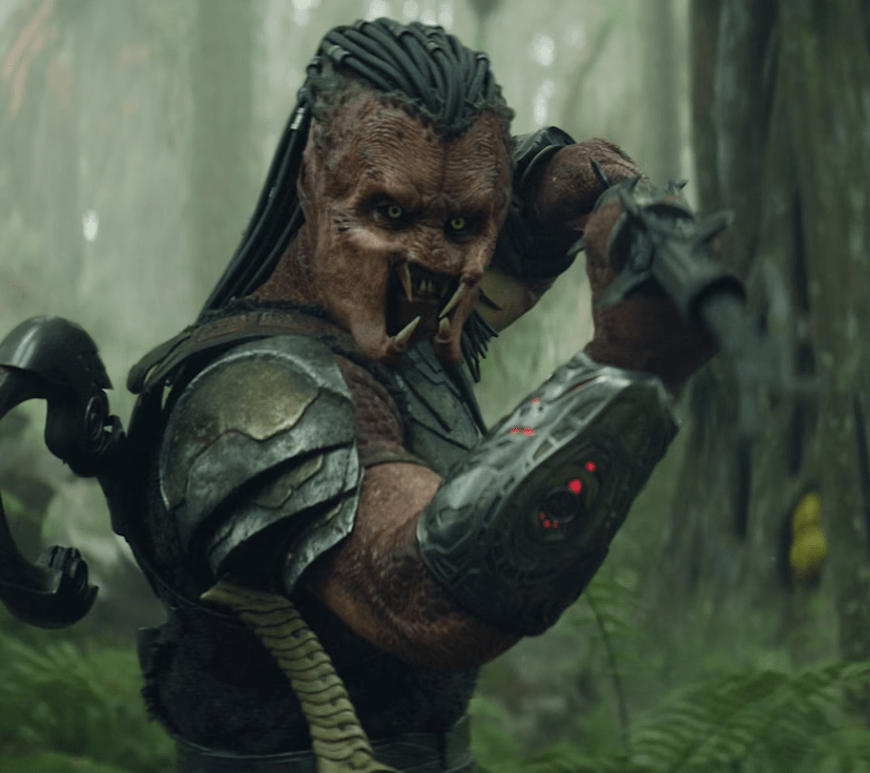
I took a trip last Friday to the local theater to see the latest installment in the Predator franchise. This latest entry, from the director of the stellar Prey, already had my interest. But Predator: Badlands represented something different than just another sequel. Rather, it was the realization of a dream that little twelve-year-old me had from the moment I fell in love with this franchise. This time, the Predator wasn’t the villain, or even a supporting player. This time, they were the hero.
What can be said about people? For whatever reason, we do love our creatures.
Now, let’s just clarify a few things. This isn’t the first time a Predator was focused on in such a prominent way. 2004’s Alien vs. Predator featured a Predator teaming up with the human lead to defeat the Alien, and the later sequel featured a prominent character in Wolf. And this says nothing of the numerous comics and games that preceded Badlands that cast the Predator as the protagonist rather than the hunter of said protagonist. Badlands, on its own, is not that original a story, with Dek, the protagonist hunter, going on a wild adventure to avenge the death of a loved one and prove himself to his peers. We’ve all seen it, even in Predator stories. But to see it on the big screen in many ways feels like a validation of such an idea. Movies take a lot of time and money to make, and for the studio willing to make such an investment in a Predator movie and release it in theaters, it says that the studio has gained the confidence in this flagship character to let them be a voice in their story. It’s something fans had wanted to see for a long time, myself included.
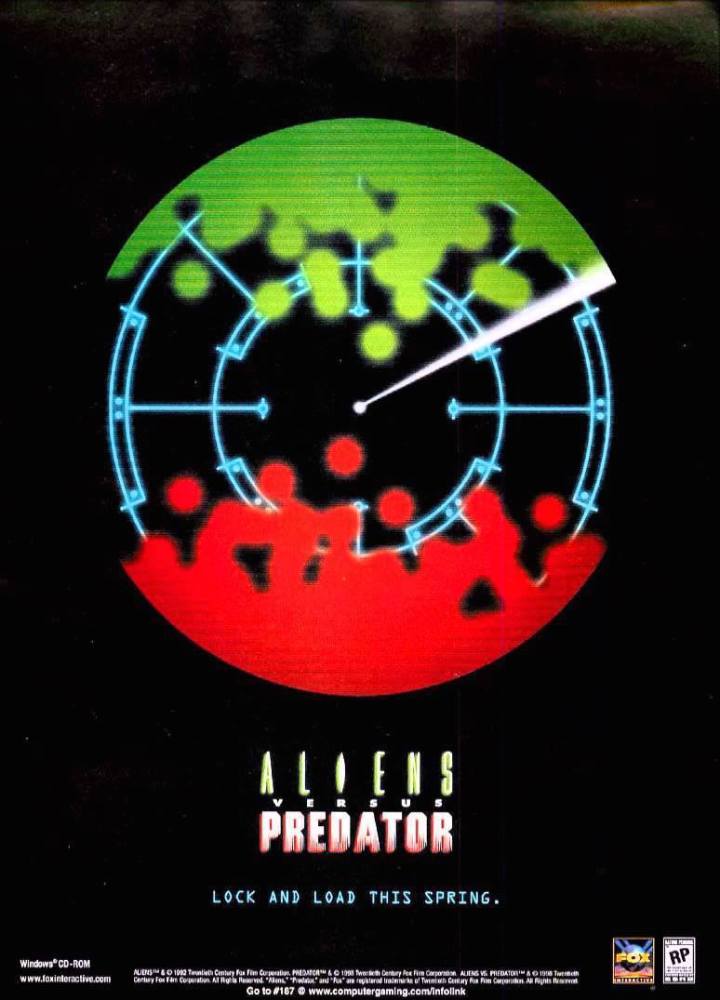
My introduction to Predator is something of a favorite story from my youth. I’d heard of these and the Alien movies as a kid and seen the VHS boxes in store aisles all the time. To me, they represented a kind of forbidden fruit. I wondered what terrors were hidden in the magnetic tape housed within. Then one day, we were cruising the PC games, and there it was. A game called Alien vs. Predator. On their own, these two characters frightened me enough before having even seen the movies. I’d heard whispered talk in school hallways about invisible monsters collecting skulls and creatures bursting from the chests of victims. To know that they were thrown together was something so terrifying that I could not conceive of it. But that tune changed when I examined the box further and found, to my amazement, you could actually play the monsters. I remember looking at the respective first-person views of the Predator’s infrared vision and of the Alien hunting prey in the dark, and it made me think: wow. I would like to do that.
And maybe that simple question really gets to the heart of the matter. In fiction, one of the things we love to do is put ourselves in the shoes of a main character, to go exciting places and do exciting things through their eyes. It’s one of the oldest reasons the art of fiction was created in the first place. When crafting a character, it’s a tightrope. You make a character too familiar, then the audience doesn’t get their escape. Too unfamiliar, and they’re still stuck at home. Or so we thought. The truth is, we’ve always loved our monsters. Sometimes enough that we want to try and be them.
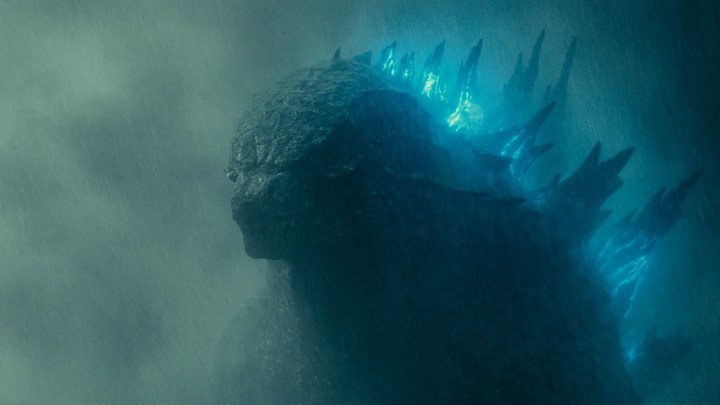
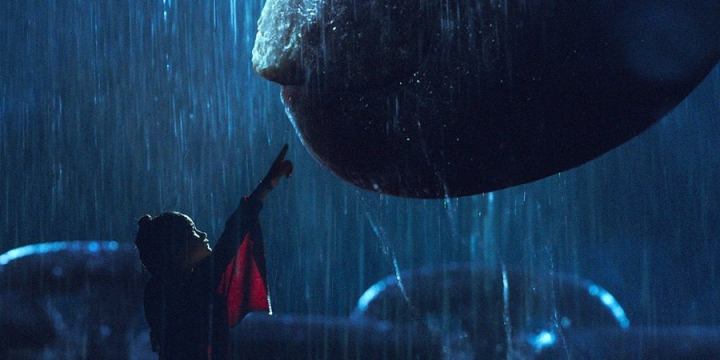
Even going back to classic cinema, films like King Kong always seemed to take a more sympathetic stance toward their monsters. It didn’t take long for Godzilla, initially a signature of atomic destruction, to become a beloved cultural icon in Japan who changed from a destroyer to a guardian of the nation, sometimes in the space of a single film. And even one of the most iconic monster stories of all time, Mary Shelly’s Frankenstein, does make its creature a much more sympathetic character than the title doctor, a stance carried over and developed in most adaptations. Go on most science fiction shows and you’d be hard pressed to find one where a creature from a far-off world hasn’t joined the crew the whatever ship the show is set on. So even back then, we loved our monsters. We always have. One need only look around any spooky holiday, and you’re far more likely to see people dressed up as Freddy Krueger than Nancy Thompson. I myself got a Predator custom and went for a few Halloweens as the space hunter. Somehow, putting an emphasis on non-human characters does seem to be a winning formula, though. It shouldn’t be a surprise that it was The Lion King that was the most successful of the Disney Renaissance period from the late 80s to the Early 2000s, nearly doubling the gross of its more human-focused contemporaries.
One of the most important aspects of Dek is not just that we follow him, but that we’re also sympathetic to him as a character. Sometimes we follow protagonists that aren’t exactly likable characters. I’m looking at you, Walter White. But Dek, as mentioned before. isn’t such a character. Rather, he is an underdog trying to prove himself. It’s a story as old as time, and now it’s Dek’s story. And again, this is another trend we often see lends itself to such characters. In the game Aliens vs. Predator 2, the Alien character offers the player a firsthand glimpse at the exploitation and suppression the creatures face if Weyland Yutani have their way, so we aren’t just playing the character but actively rooting for them to succeed. Dek witnesses his brother’s murder by his father and is sent to a faraway world, now wanting to prove his worth while also avenging his brother’s death. The audience being able, and willing, to feel for these characters often portrayed as frightening and monstrous, is a great example of the power of audience empathy, which is both an emotional way of viewing a story, and all the more immersive for an audience. It also shows something that has been proven time and time again. Sometimes, the more you know about something or someone, the less scary they are. While this may not bode well for monsters in some cases, it bodes extremely well for our heroes.
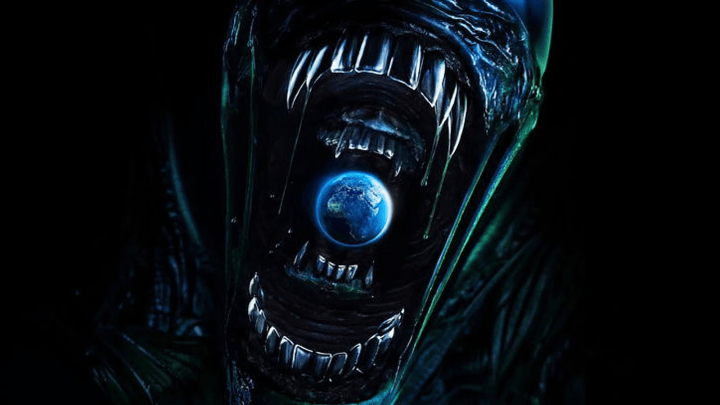
What’s interesting to me is watching how some series gradually evolve from having more negative portrayals of their monsters before shifting the focus onto them. Jurassic Park is a good example. The original film, while peppered with moments of heroism for its flagship dinosaurs, typically will still portray them as dangerous, and terrifying. The roadside attack by the T.rex is still one of the most scarring moments for anyone who came of age watching the movie. But only a few years later, the first sequel subverted audience expectations, portraying the T Rex as a family unit that was being victimized by those seeking to exploit them for profit, and the father T.rex going on a rampage through San Diego to rescue his child, actually makes them look somewhat heroic, the odd eaten bystander not withstanding. And from then on, the dinosaurs only became more sympathetic until one of them, the raptor Blue, joined the main cast in the first Jurassic World. Even the slimy Alien has something of a potential protagonist in the new Alien: Earth, where one of the slimy beasts forges a bond with main character Wendy, and becomes her loyal ally during her escape from captivity from the sinister Boy Kavalier. And who can forget The Terminator1 franchise, which initially cast its futuristic cyborg as the villain before having them (or at least the same model) return as the hero for a swashbuckling part 2? In a lot of franchises, it almost seems like a natural progression for these and similar franchises.
This can be for a variety of reasons. With something like The Lion King, it can sometimes be easier to see yourself in an animal avatar than a human one. In the case of Predator, the culture that has evolved around the space hunter and its ways has fascinated science fiction fans since the earliest comics. Sometimes, wanting to learn about another culture can play a big part in it. Perhaps that’s why we’ve yet to see the Alien take the pilot’s seat in a feature film yet.
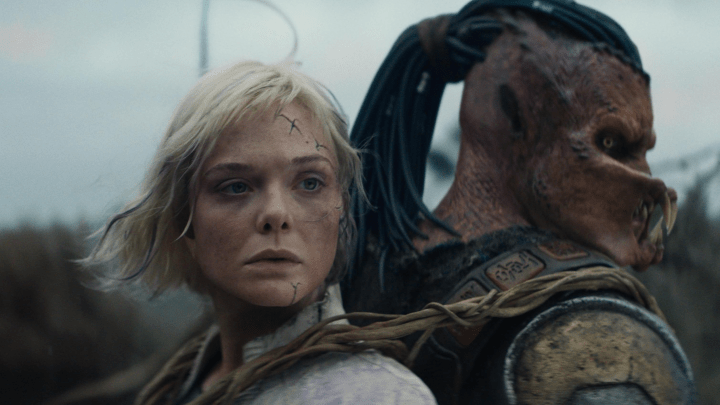
But another simple reason is it just lends itself to good escapism. You look at stories featuring daring adventurers, and most of them are a way for the audience to experience those same thrills, and do great things along with the main character. Sometimes we all like to take a break from ourselves so we can be a secret agent or adventurous archeologist. Things like this are empowering, and they let the audience take a break from themselves for a bit, which in small doses can be a fun past time. So why not go a step further and escape from your own skin, and become a hunter from outer space who can wield any number of gadgets, or a fierce dinosaur (or clone) stalking the jungles in search of prey.
I know this played a large part in my introduction to the Alien and Predator franchises. One of the reasons I love the story of playing the 1999 game is, despite her better judgement, my mother was willing to let me give that game a try. Try it I did, and it is a game I still play to this day. Aliens vs. Predator from 1999 (for sale on a variety of venues as Aliens vs. Predator Classic 2000) was a formative experience for me not just because its a damn great game, but because of its variety. The marine campaign is a well made and atmospheric space shooter, but even it pales in comparison to the sheer inventive nature and immersive gameplay in the Alien and Predator stories, which give the audience a unique range of tools and abilities catered to each character. You can’t play the same the same way twice. The Alien will require different skills, and the Predator will to. And apart from all of that, it was just so exciting to use weapons like the disc and plasma caster, or prowl the vents and shafts of darkened ships in search of our next victim. Even as far back as when there were only four Alien movies and two Predator movies, I enjoyed seeing the story from the perspective of these characters. And among legions of fans, even as far back as the original AvP Comic which featured the heroic Dachande, I was not alone.
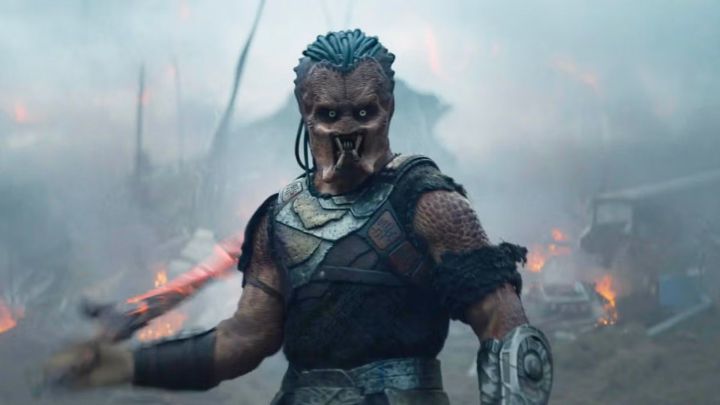
Seeing a Predator take the lead role on the big screen was bound to happen, perhaps as far back as when that first classic film cemented itself as one of the sci-fi horror greats. And it’s going to happen again with another once-feared monster somewhere down the line. I, for one, an optimistic of seeing the iconic Alien take such a turn on the big screens. And I do hope that Dek’s adventure will be a sign of things to come for the long-standing science fiction series, while not overriding the science fiction horror that came before. Maybe that’s because when we have monsters as our heroes, that provides one of the many things I so loved about that original 1999 PC game. We crave heroes that stand apart and have something uniquely their own. And having monsters join the ranks of our heroes?
That’s just more variety.